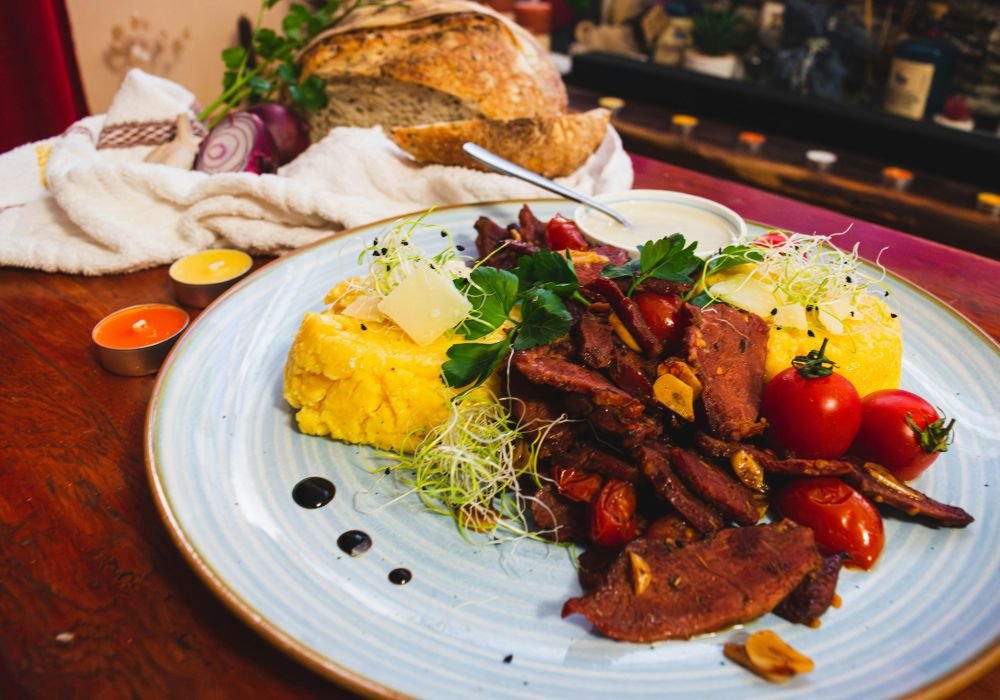
Romanian cuisine is hearty, comforting, and unapologetically rich. At its heart lies a simple but powerful quartet: pork, beef, polenta (known locally as mămăligă), and sour cream (smântână). These ingredients show up again and again, creating meals that warm the soul on cold winter nights and satisfy after a long day in the fields or city streets. Growing up hearing stories from Romanian friends and later tasting these dishes myself during travels through Transylvania and Bucharest, I’ve come to appreciate how this food tells the story of a resilient people who turned humble ingredients into something deeply flavorful and communal.
This isn’t fancy fine dining—it’s honest, peasant-rooted cooking elevated by tradition and love. Pork dominates because it’s versatile, affordable, and flavorful when raised well. Beef adds depth to stews and soups. Mămăligă serves as the everyday bread substitute, soaking up sauces like a sponge. And sour cream? It brings that signature tangy creaminess that balances richness and cuts through fat beautifully. Together, they create a cycle of comfort: pork or beef dishes, polenta on the side, sour cream dolloped generously. Repeat.
The Role of Pork in Romanian Cuisine
Pork isn’t just popular—it’s practically a cultural cornerstone in Romania. Historically, families raised pigs through the year, culminating in the winter slaughter (Igniat around December 20), when every part got used. This led to dishes that celebrate the whole animal.
- Rich flavor from fat and seasoning — Pork’s natural marbling makes stews and grills juicy.
- Versatility — From ground in fillings to smoked sausages to whole cuts.
- Affordability and tradition — Easier to raise than beef in rural areas.
Beef plays a supporting role but shines in specific recipes, often mixed with pork for balance.
Iconic Pork Dishes: Sarmale and Beyond
Sarmale (Cabbage Rolls)
Ask any Romanian what their national dish is, and sarmale tops the list. These are cabbage leaves (usually pickled for tang) stuffed with a mix of ground pork, beef, rice, onions, and spices, then slow-cooked in a tomato-based sauce. The result is tender, savory rolls bursting with umami from the fermentation and meat juices.
Served with a big scoop of mămăligă and a generous spoonful of sour cream, it’s pure comfort. I remember my first plate in a small Bucharest restaurant— the sour cream melted into the warm rolls, creating this creamy, tangy contrast that made me go back for seconds (and thirds). It’s labor-intensive, often made in huge batches for holidays like Christmas or weddings, bringing families together.
Tochitură (Pork Stew)
Tochitură is the ultimate pork celebration, especially in regions like Moldova or Oltenia. Chunks of pork (often leg or shoulder), bacon, sausages, and sometimes liver simmer slowly in their own fat or lard with onions, garlic, and tomato sauce. Variations include adding wine or mushrooms.
Topped with a fried egg, crumbled telemea cheese (a briny sheep’s milk cheese), and served over mămăligă, it’s decadent. The sour cream isn’t always mandatory here, but many add it for extra silkiness. This dish feels like a hug from the inside—rich, hearty, and perfect after a snowy day.
Mici (Mititei)
These skinless grilled sausages mix ground pork (often with beef) with garlic, pepper, thyme, and a touch of baking soda for fluffiness. Street food favorites, they’re served with mustard, bread, and sometimes sour cream on the side. Not polenta-heavy, but the combo of grilled meat and tangy cream is classic Romanian.
Beef’s Place in the Mix
Beef appears less often solo but adds important depth.
- In sarmale, the pork-beef blend prevents dryness.
- Ciorbă de vacuta (beef sour soup) uses chunks of beef with vegetables, soured with borș (fermented bran), and finished with sour cream and herbs.
- Beef stews or mici variations highlight its leaner texture against pork’s richness.
Mămăligă: The Unsung Hero of Every Meal
Mămăligă is Romanian polenta—cornmeal boiled with water and salt into a thick porridge. Unlike smoother Italian polenta, Romanian mămăligă is often firmer, sliced like bread.
It’s the perfect side: neutral enough to soak up sauces, yet substantial. Basic versions are just cornmeal, but upgrades include:
- Mămăligă cu brânză și smântână — layered with cheese and sour cream, baked or stirred creamy.
- Bulz — stuffed with cheese, grilled over fire.
- Balmos — mixed with cheese, eggs, buttermilk, and sour cream for ultimate indulgence.
I once had mămăligă straight from a cast-iron pot in a mountain village—simple, with just sour cream and crumbled cheese. The contrast of hot, gritty cornmeal against cool, tangy cream was unforgettable.
Sour Cream: The Finishing Touch
Smântână is thicker and tangier than Western sour cream, made from fermented cream. It cools spicy or rich dishes, adds creaminess to soups, and tops almost everything.
- Dolloped on sarmale or ciorbă.
- Mixed into polenta dishes.
- Served plain with mamaliga for breakfast.
It’s the glue holding the quartet together—without it, many dishes feel incomplete.
Comparison of Key Dishes
| Dish | Main Meat | Key Accompaniments | Sour Cream Role | Best For |
|---|---|---|---|---|
| Sarmale | Pork + Beef | Mămăligă, pickled peppers | Dolloped on top | Holidays, family meals |
| Tochitură | Pork (multi-cuts) | Mămăligă, fried egg, cheese | Optional drizzle | Winter feasts |
| Mămăligă cu Brânză | None (or added meats) | Cheese, sour cream | Mixed or topped | Comfort food anytime |
| Ciorbă de Burtă | Beef tripe | None (soup) | Stirred in | Hangover cure/recovery |
Pros and Cons of Romanian Staples
Pros
- Incredibly flavorful and satisfying.
- Uses affordable, local ingredients.
- Builds community—big batches for gatherings.
- Versatile: meat-heavy or dairy-focused options.
Cons
- High in fat and calories (not diet food).
- Time-consuming prep for some dishes.
- Strong flavors (sour, garlicky) might overwhelm newcomers.
- Limited vegetarian adaptations traditionally.
People Also Ask
What is the national dish of Romania?
Sarmale (cabbage rolls) is widely considered the national dish, often served with polenta and sour cream.
What is mămăligă and how is it different from Italian polenta?
Mămăligă is Romania’s version of polenta—thicker, coarser, and often used as bread. It’s simpler (just cornmeal, water, salt) and frequently paired with dairy.
Is Romanian food spicy?
Not typically—it’s more garlicky, sour, and herby than hot spicy.
What meats are most common in Romanian cuisine?
Pork reigns supreme, followed by beef, chicken, and lamb. Pork appears in stews, grills, and stuffings.
Where can I try authentic Romanian food?
Traditional restaurants (han or crama) in Bucharest, Brasov, or rural areas. Street vendors for mici, home-style spots for sarmale.
FAQ
Is sour cream essential in Romanian cooking?
Yes—it’s the signature finish for soups, rolls, and polenta dishes, adding tang and creaminess that balances richness.
Can I make these dishes vegetarian?
Absolutely—swap meat for mushrooms, lentils, or eggs in sarmale or tochitură variations. Mămăligă with cheese and sour cream is naturally vegetarian.
What’s a good beginner Romanian meal?
Start with mămăligă topped with sour cream and telemea cheese, plus mici on the side. Simple yet representative.
How healthy is Romanian food?
It’s hearty and nutrient-dense from veggies and fermented elements, but high in fats—best enjoyed in moderation.
Why is pork so dominant?
Tradition from pig farming, affordability, and flavor—plus cultural events like pig slaughter celebrations.
Romanian food built around pork, beef, polenta, and sour cream isn’t about complexity—it’s about depth of flavor from simple things done right. The next time you’re craving something soul-warming, think of a plate of sarmale steaming beside golden mămăligă, crowned with that essential sour cream. It’s not just food; it’s home on a plate.