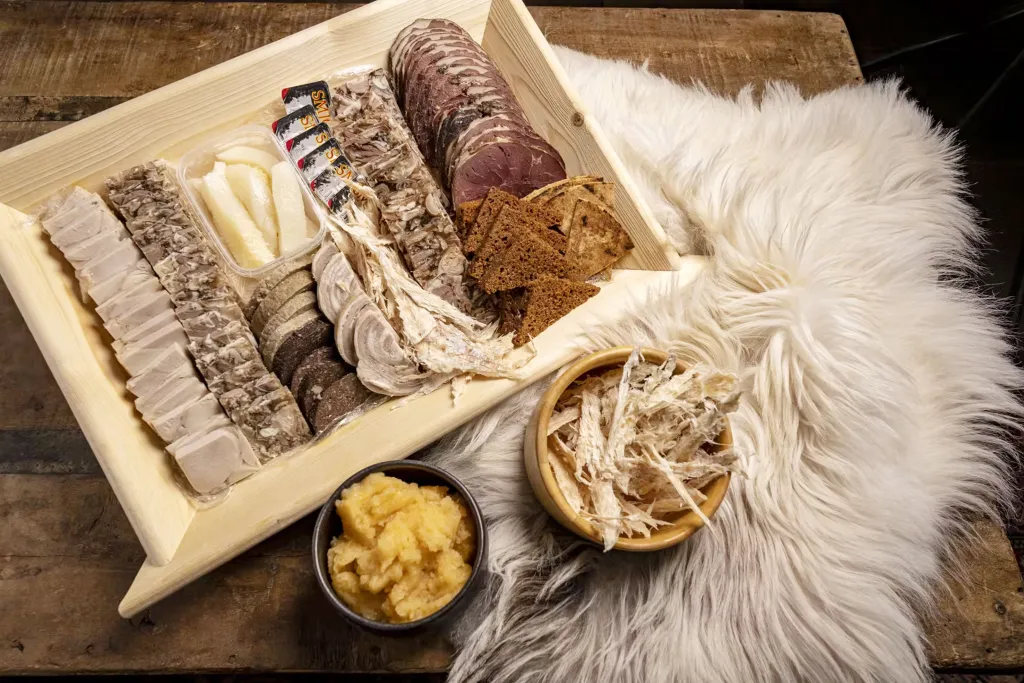
Traditional Icelandic food reflects a history of resilience in one of the world’s harshest environments. Settled by Vikings around 874 AD, Iceland’s early inhabitants faced volcanic landscapes, long winters, and limited arable land, so cuisine developed around abundant seafood, hardy sheep, and dairy from cows and sheep. Preservation techniques like smoking, drying, fermenting, and pickling in whey became essential for surviving scarce fresh resources. Over centuries, Danish influence added elements during colonial times, but the core remains rooted in local ingredients: lamb, fish, skyr, and rye bread. Today, while modern Reykjavik boasts innovative restaurants, traditional dishes endure, often celebrated during festivals like Þorrablót in midwinter.
These foods tell stories of survival and ingenuity. I remember my first trip to Iceland, standing in a Reykjavik market staring at cubes of hákarl, the infamous fermented shark. The smell hit like a punch—ammonia-sharp and unforgettable. A local laughed and said, “It’s an acquired taste… or a test of character.” That moment captured the spirit: bold, unapologetic, and deeply tied to the land.
The Staples of Icelandic Cuisine
Icelandic meals center on a few key ingredients that have sustained people for over a millennium.
Lamb dominates because sheep thrive in the rugged terrain, grazing freely on wild grasses and herbs, giving the meat a distinctive, clean flavor.
Fish and seafood come next, pulled from the cold, nutrient-rich North Atlantic—cod, haddock, arctic char, salmon, and more.
Dairy products, especially skyr, provide protein and comfort in a place where fresh produce was once rare.
Potatoes and rye bread round out the basics, often paired with preserved meats or fish.
Hákarl: The Fermented Shark That Defines Adventure
Hákarl stands as Iceland’s most notorious dish—fermented Greenland shark. Fresh shark meat contains high urea levels, making it toxic, so tradition calls for burying it underground for weeks to ferment, then hanging it to dry for months. The result? Cubes of meat with an intense ammonia aroma and a pungent, cheese-like taste.
Many pair it with a shot of brennivín (Black Death schnapps) to cut the edge. During Þorrablót, it’s a centerpiece of þorramatur buffets.
Honestly, it’s not for everyone—I’ve seen tough travelers turn green—but trying it feels like participating in Viking history. If you’re brave, places like Café Loki in Reykjavik offer small portions to test your limits.
Skyr: Iceland’s Superfood Yogurt
Skyr might look like thick yogurt, but it’s technically a fresh cheese strained from milk. Vikings brought the recipe, and Icelanders perfected it over centuries. High in protein, low in fat, and naturally tangy, it’s eaten plain, with berries, or honey.
Modern versions appear worldwide, but authentic Icelandic skyr has a denser texture and subtle sourness. Start your day with it like locals do—it’s refreshing after a night under the northern lights.
Pros of skyr:
- Packed with probiotics and protein
- Versatile for sweet or savory dishes
- Low-calorie yet filling
Cons:
- Can be too tart for some palates without additions
Hangikjöt: Smoked Lamb for Festive Feasts
Hangikjöt translates to “hung meat”—lamb smoked over birch or sometimes dried sheep dung for earthy flavor. Boiled or served cold, it’s a Christmas staple, often with béchamel sauce, potatoes, and peas.
The tradition ties to preserving meat for winter. Families gather around it during holidays, sharing stories. If you visit in December, seek it at places like Jómfrúin in Reykjavik for open-faced sandwiches.
It’s tender, smoky, and comforting—far more approachable than fermented shark.
Plokkfiskur: Comforting Fish Stew
Plokkfiskur means “plucked fish,” a simple stew of cod or haddock, potatoes, onions, and béchamel sauce. It’s hearty home cooking, often topped with cheese and baked.
This dish uses leftovers cleverly, reflecting resourceful Icelandic kitchens. Warm and creamy, it’s perfect on chilly days.
Many Reykjavik spots serve elevated versions, but home-style at local eateries hits the spot.
Harðfiskur: Dried Fish Snack
Harðfiskur is wind-dried fish (usually cod or haddock), eaten like jerky with butter. It’s a common snack—crunchy, salty, and protein-rich.
Kids munch it like chips. Pair it with butter for balance. Find it in supermarkets or markets.
Rúgbrauð: Sweet Dark Rye Bread
Rúgbrauð is dense, dark rye bread baked slowly, sometimes in geothermal ground for a sweet, malty flavor (called lava bread or hverabrauð).
Served with butter, smoked salmon, or hangikjöt. Its crustless texture and subtle sweetness make it unique.
Try it at breakfast—it’s filling and pairs well with everything.
Kjötsúpa: Hearty Lamb Soup
Kjötsúpa is lamb soup with vegetables, barley, and herbs. It’s Iceland’s go-to comfort food for colds or hangovers.
Simple yet nourishing, it’s often all-you-can-eat at places like Fjörukráin.
Pylsur: The Famous Icelandic Hot Dog
Pylsur uses lamb-beef-pork mix, topped with ketchup, sweet mustard, remoulade, raw and fried onions. Order “eina með öllu” (one with everything).
Bæjarins Beztu Pylsur in Reykjavik is legendary—Bill Clinton tried it plain.
It’s cheap, quick, and beloved street food.
Other Notable Traditional Foods
- Svið: Singed sheep’s head, boiled—cheeks and tongue are prized.
- Kleinur: Fried dough twists, like donuts, dusted with sugar.
- Laufabrauð: Leaf bread, thin and crispy, decorated for Christmas.
Þorramatur: The Midwinter Feast
Þorramatur is a buffet of preserved foods during Þorrablót: hákarl, svið, pickled ram testicles (hrútspungar), blood sausage, and more, served with rúgbrauð and brennivín.
It’s a cultural ritual celebrating heritage—intense but fascinating.
Where to Try Traditional Icelandic Food in Reykjavik
Reykjavik offers spots for authentic tastes:
- Bæjarins Beztu Pylsur: Iconic hot dog stand.
- Café Loki: Traditional sampler plates near Hallgrímskirkja.
- Sea Baron (Sægreifinn): Lobster soup and seafood.
- Íslenski Barinn: Adventurous options like puffin or whale.
- Messinn: Plokkfiskur in skillets.
For markets, Kolaportið Flea Market has local vendors on weekends.
People Also Ask
What is the most traditional food in Iceland?
Lamb-based dishes like hangikjöt and kjötsúpa, plus skyr and seafood staples.
Is Icelandic food spicy?
No—flavors are mild, focusing on fresh or preserved ingredients without heavy spices.
What is Iceland’s national dish?
Hákarl is often called the national dish, though skyr or lamb are everyday favorites.
Do Icelanders eat fermented shark?
Some do during traditions, but it’s not daily fare—many avoid it.
What sweet treats are traditional in Iceland?
Kleinur, pancakes (pönnukökur), and licorice candies.
FAQ
Is Icelandic food healthy?
Yes—high in omega-3s from fish, protein from lamb and skyr, low in processed items traditionally.
Can vegetarians find traditional options?
Limited—skyr, rúgbrauð, and potatoes work, but most center on animal products. Modern spots offer adaptations.
What’s the best time to try seasonal traditional foods?
Christmas for hangikjöt, Þorrablót (January-February) for þorramatur.
How expensive is traditional Icelandic food?
Hot dogs are affordable; preserved specialties vary, but markets keep costs down.
Should I try hákarl if I’m squeamish?
Start small—many do for the experience, but it’s okay to pass.
Icelandic cuisine isn’t flashy—it’s honest, born from necessity, yet full of character. Whether you brave the shark or stick to lamb soup, each bite connects you to a thousand years of history. Next time you’re there, skip the tourist traps and seek the real thing. Your taste buds (and maybe your courage) will thank you.